BREAKING NEWS
Showing posts with label traditions. Show all posts

Thursday, October 20, 2016

Oktoberfest: Not just for Germans

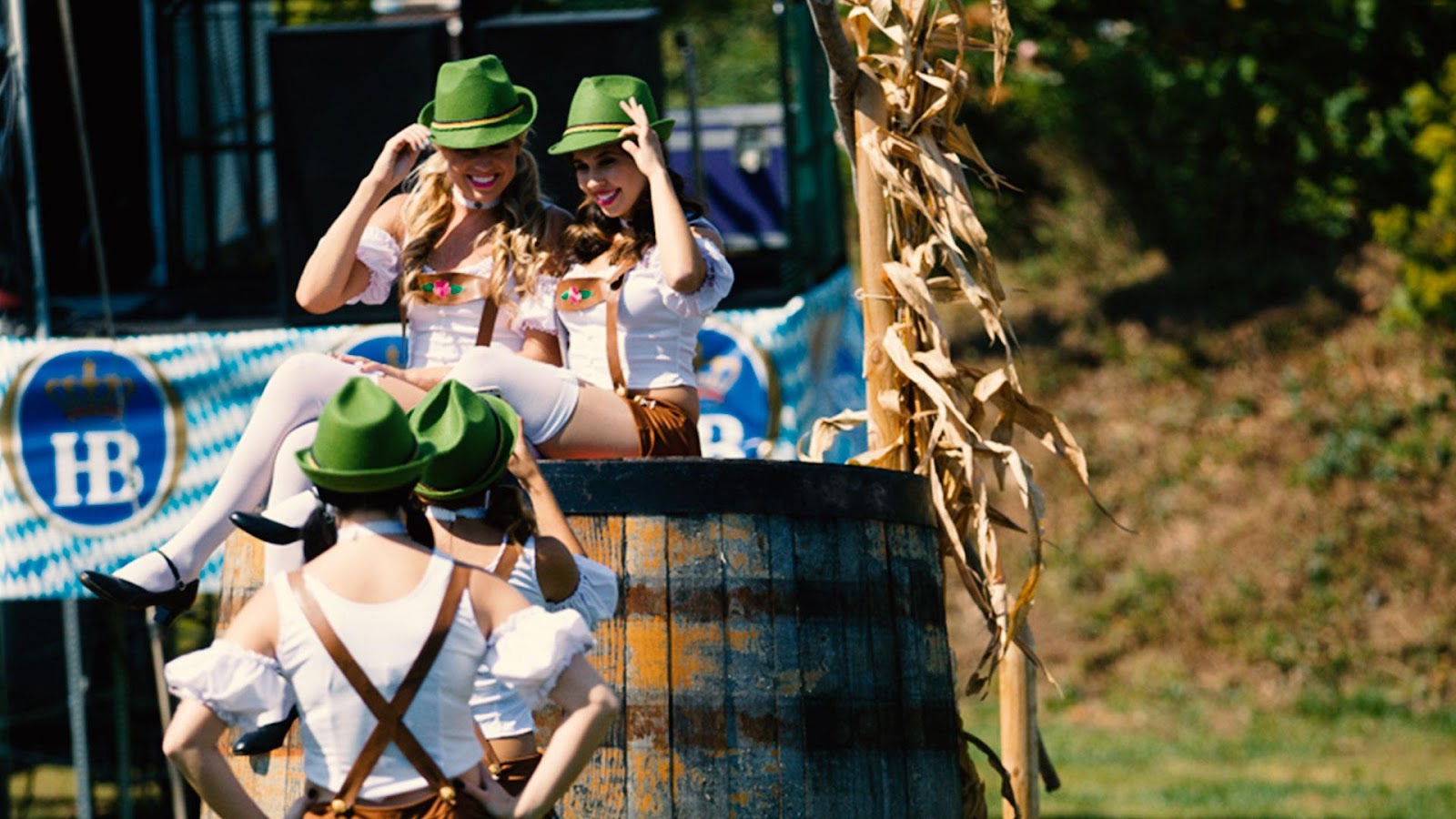
Although not technically a harvest festival, Oktoberfest is one of the most well-known fall festivals worldwide, and represents the basic human need for community and celebration. 

Today, Oktoberfest smacks of fall, with seasonal beverages and attractions to connect and recharge.

oktoberfest-2.jpg

The City of Munich’s website claims the origin of Oktoberfest, goes back to October 12, 1810.  It was on that day that the future King Ludwig I married Princess Therese of Saxony-Hildburghausen, giving all of Munich a reason to celebrate.  The festivity brought inspiration to celebrate yet again the following year, beginning the massive tradition of Oktoberfest. Each year since that famous wedding, new attractions, agricultural shows, contests, and beer tasting stations have been added to the festivity.
Like many harvest celebrations, Paige Villiard of The Black Label, writes that Oktoberfests were moved earlier in the season to accommodate better weather. Today many Oktoberfests begin the third week of September.


The Black Label notes other noteworthy festivals that begin in September and span through October, such as the Leavenworth Oktoberfest in Leavenworth, WA, a small town modeled after a Bavarian village, which celebrates the Bavarian heritage with  authentic German bands. There is even an Oktoberfest celebration specifically held in November. The Wurstfest is a ten day Bavarian festival held near San Antonio, TX in a town called New Braunfels, from November 4-13.  Here, German culture mixes with Texan traditions, including a polka competition.


To this day, the popularity of Oktoberfest brings many visitors to Munich, with hotels booking as far as one year in advance. The City of Munich regards Oktoberfest as the largest festival in the world, one that inspired many other cities to follow the same tradition in their own neck of the woods.  

The celebration starts as early as September, such as the Oktoberfest in Vernon, NJ which was held at Mountain Creek on September 24th and 25th.  The Great Lawn was home to pony rides and sack races, while participants enjoyed the Lederhosen 5K race.


Looking to celebrate the harvest with traditional German food and brew? Florida isn’t behind on the 8-ball… the weather there is nice enough to celebrate during the month from which it’s named.  Check out some of these Okotberfests, and please, share your favorite stories and photos from those that you’ve attended, and how they helped you recharge before the cold snap of fall.


14358666_1390550197638963_271651469589852787_n.jpg


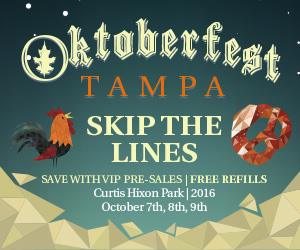
Oktoberfest Tampa, held at Curtis Hixon Park, is filled with fun challenges like chicken dancing and stein hoisting.  Not to miss is the Mr. and Mrs. Oktoberfest competition, fun to watch or to participate!

logo-2016.jpg

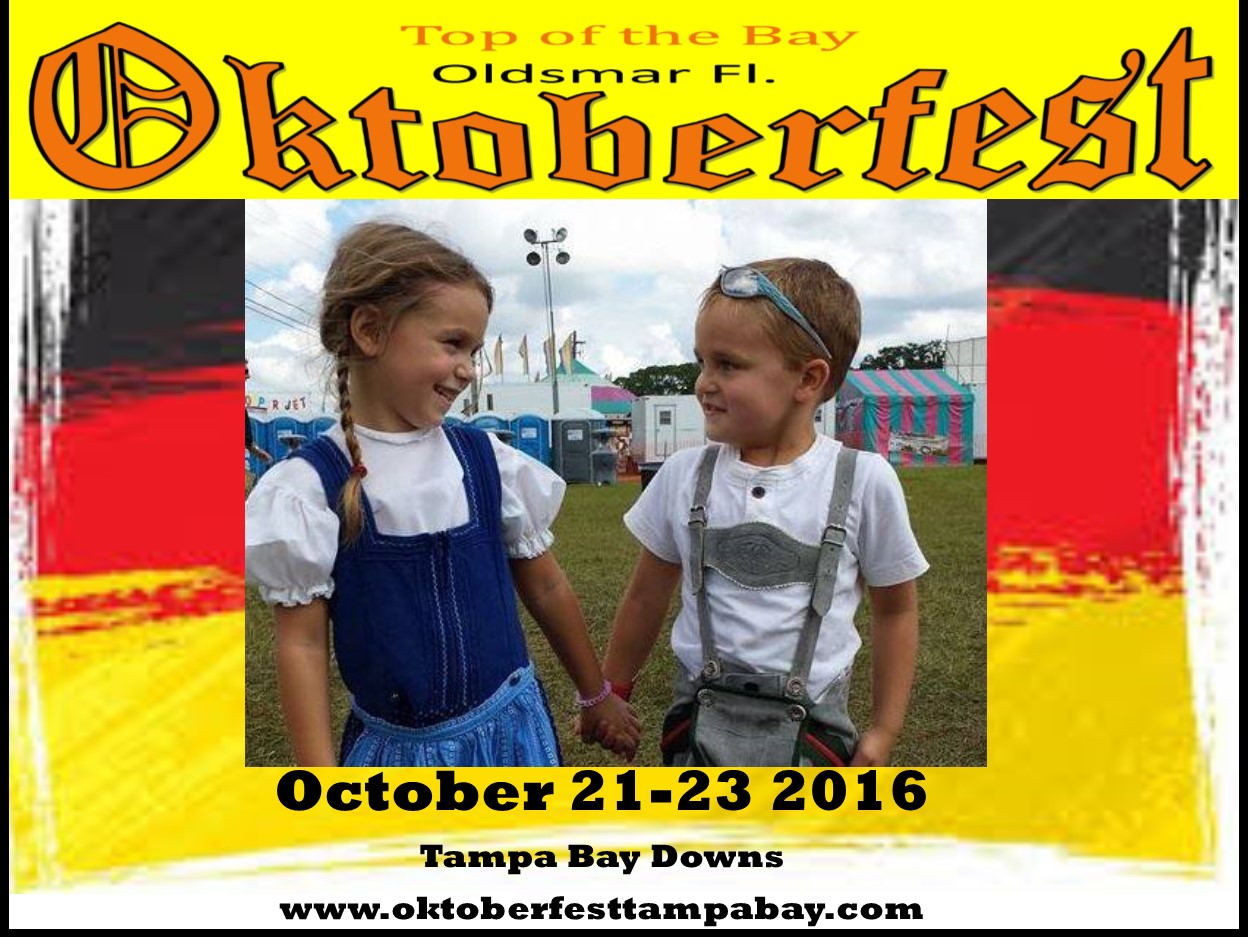
Hosted at Tampa Bay Down, this three-day celebration features German culture with authentic sausage and brats, steins of beer, traditional and contemporary music from local bands, log-sawing contests, carnival attractions, and many hands-on activities for the entire family.   
1473438351.jpg

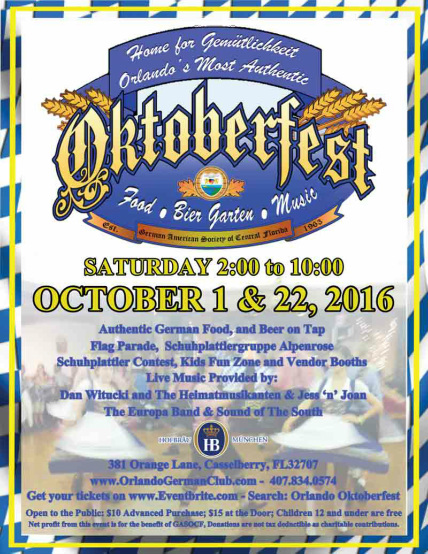
Hosted by the German American Society of Central Florida, this authentic Oktoberfest celebration is held in the Orlando area.  The society hosts two Oktoberfests each year, both open to the public.  Highlights of this festival include two authentic German bands, real Bavarian beer on tap, home cooked German food, and entertainment from the Alpenrose Schuhplattler Dancers.

NJ Harvest Festival at Glenwild Gardens

Our favorite New Jersey garden center appreciates the harvest as much as we do.  Join in the season's favorite traditions of hayrides, pumpkin painting, as well as support for our veterans and food collections for those in need.


Not in NJ?
Mind Key Rhody fans should check out the harvest festival at Clements Market in Portsmouth this weekend: http://mindkeyblog.blogspot.com/2016/10/ri-event-harvest-festival-at-clements.html


Tuesday, October 18, 2016

Sukkot: A Spiritual Harvest

By Tamara Rokicki

Harvest festivals represent renewal of body and mind--a harvesting of past mistakes, experiences, and relationships that is essential to personal development and growth. We are created to gather the balance of life and learn from its intricate patterns—the good and the bad. Connecting with Spirit helps identify with the seemingly mystical and distant aspects of life.

This balance and harvesting of life experience is reflected in ancient traditions.  That many of them are still practiced today proves their importance in daily life and the human need for inspiration to start anew. The ancient Jewish Festival of Sukkot, like many harvest celebrations, reflects the spiritual side of reaping the fruit of our labors.  Beginning the seventh month of the Jewish calendar and ending on Yom Kippur (which this year ends on October 12th), this seven-day festivity is a spiritual reconnection that harvests the good and the bad.

John Parsons, Hebrew historian and founder of the site Hebrew4Christians.com, writes that during this period, families construct a sukkah, or small tent, in which to consume the food prepared for the festival.  It is a reminder of the forty-year sojourn in the desert where the Israelites lived in huts before transitioning to the new land.

Upon reaching their destination, Parsons writes that the Israelites continued observing Sukkot as a way to celebrate the fall harvest. As Sukkot ended the agricultural year, the Israelites decorated their huts in colorful displays. 

Today, Sukkot is celebrated by eating harvest-inspired food, which includes fruit and vegetables in season. Jewish food and lifestyle blogger, Tori Avey, writes that kreplach, or stuffed dumplings, are also consumed during this time.  It is very common to not only eat, but also sleep, in the makeshift sukkah for seven days.

Like many harvest festivals, Sukkot strongly represents the social connection between people.  This origin of this festivity is deeply rooted in the thankfulness of the Jews being restored as People of God, and brought out of slavery into a new land.  Sukkot is relatable because it represents a fresh start, a new way to harvest the past events and move forward with a clean slate.  As the Israelites were granted freedom from slavery—and from sin—harvest festivals such as Sukkot offer that same spiritual renewal today by allowing a fresh start to harvest the fruit of our labors.

When in your life have you started anew? Did the spiritual or energetic implications of that renewal affect your career or life path? Did you take the time to reflect upon and harvest the lessons and tools learned from the experience?

Monday, October 17, 2016

Harvest: A Human Connection


By Tamara Rockiki

Harvest festivals are representative of our own personal growth, and the need to share our successes. They center around abundance and community, and in this day and age of limited face-to-face connection, they remind us of the importance of celebrating that which we’ve done to get us where we are. This week, as an inspiration to share and grow from our personal harvests, we will be sharing stories of harvest traditions around the world, such as the olive harvest festival which has been celebrated in the township of Magione, Italy, since 2001.  

Stephanie Spavento of the The Perpetual Explorer writes that this festival takes place on November 23rd, in conjunction with the feast of St. Clement, the patron saint of metalworkers and blacksmiths.  It celebrates the production and consumption of the local oil, which happens to be some of the world’s best. The entire town is invited to enjoy the festivity.  Dotting the streets are several workshops, food markets, art contests, wine tasting, and various entertainment.  

The National Geographic book, “Sacred Places of a Lifetime” shares that the climax of this festival is a special Mass where the priest blesses the newly produced oil.  Afterward, an extravagant banquet is held in the town’s 12th century medieval castle.

This festival, like many others around the world, is an example of how agricultural harvests have impacted social structure.  What was born out of bare necessity for survival, forged a human connection still felt to this day.  Around the world, harvests like the one in Magione bring together the best of humanity.  Agricultural harvest has always been the staple of existence, since the first Mesopotamian harvests.  With it, human interaction was created in order to work together for the common goal of survival.  When the harvest yielded fruitful rewards, that same human collaboration turned into gratefulness and serenity.  From it spawned the tradition of thanksgiving, of togetherness, and of unity. 

As the twenty-first century marks the peak of modernization and instant results, the importance of harvest is something that goes beyond supporting local agriculture and healthier living.  It is a staple human connection we must not lose.  Forgetting the importance of harvest celebrations means losing a part of our history, a way to connect with others in a more personal way, and the humility of hard work and dedication. 

The article Social Relationships and Health, published by American Association for the Advancement of Science, states that lack of social connection can lead to obesity, smoking, and high blood pressure.  It seems that the same social connection that helped shape early societies through the necessity of farming, is equally important in the way it affects us to this day. 

The ancient harvest traditions were crucial in ensuring human survival.  Growing and thriving is a recurring theme for those communities that flourished into major cities.  As agrarian societies were formed, so were the cultural guidelines and connection that would enable their prosperity.

Like the harvest celebration in Magione, our own local celebrations carry the human connection to be passed down to future generations. 

How has your local or personal harvest brought you closer to others? How do you harvest a connection with society, and how will it inspire your future and future communities?

Monday, December 21, 2015

Celebrating the solstice across culture and religion

Winter Solstice at Stonehenge 
In my mind, the solstice is why we say "happy holidays" instead of Merry Christmas.  It's why we celebrate the New Year, Christmas, Hanukkah and any other number of holidays this time of year.  It's the real reason for the season.

Please let's not get into a religious discussion here.  I'm not a pagan, nor am I a witch.  In fact, I was raised Catholic. This isn't about religion.  It's not even about spirituality.  Well… except for how the tradition of the season resonates with each of us in a very spiritual way.

The Winter Solstice an actual astronomical event.  Today is when the day is the shortest and the night is its longest.  From here on out, the days will only grow longer until the summer solstice in June.

Hence, the first day of winter, or the winter solstice, marks a very important moment of the year… "The coming of the light."

This one phrase sums up much of the deep meaning behind our holiday traditions.  The "holidays" includes many different celebrations across many different religions and cultures, but also the New Year.  The light for this year has waned completely, and as the days begin to grow in length again, we put aside those darkest moments to celebrate a brand new year.  I doubt there was any reason why January was chosen as the start of the year in the Gregorian calendar. Many other cultures have chosen dates not far from the solstice to celebrate—either late fall, or late winter/early spring, as if needing to acknowledge the ending of the harvest, of the light, and the beginning of new things as the light grows again.

Then there is Christmas.  The coming of the "son."  Or the "sun."  In Christianity, Jesus was the savior and the light. Many scholars believe that the events surrounding his birth make it unlikely that Jesus was born in December (the census did not happen in the cold of winter, nor were shepherds out watching their flocks) and so it isn't a coincidence that December was chosen as his birthdate.

Whether his true date of his birth or no, celebrating Jesus's birthday as the light begins to grow is poignantly appropriate, as he brought light to the world.  Hanukkah, the festival of lights, is another celebration of light during the darkest moments of the year. December is a traditional time for candles, twinkling lights, and bright celebrations that remind us that the darkness will not last forever, and that there is always hope, even during the bleakest of nights.


Whether you celebrate this time of year or not, whether you find yourself spiritual or scrooged, the days surrounding the winter solstice are important for our collective soul.  For remembering that after darkness always comes light.  For getting in tune with the rhythms of the world on which we live.  And for knowing, spiritually and emotionally, that the darkest hour always comes before dawn.


Back To Top
Copyright © 2014 Mind Key, the blog. Designed by OddThemes