
by Tamara Rokicki
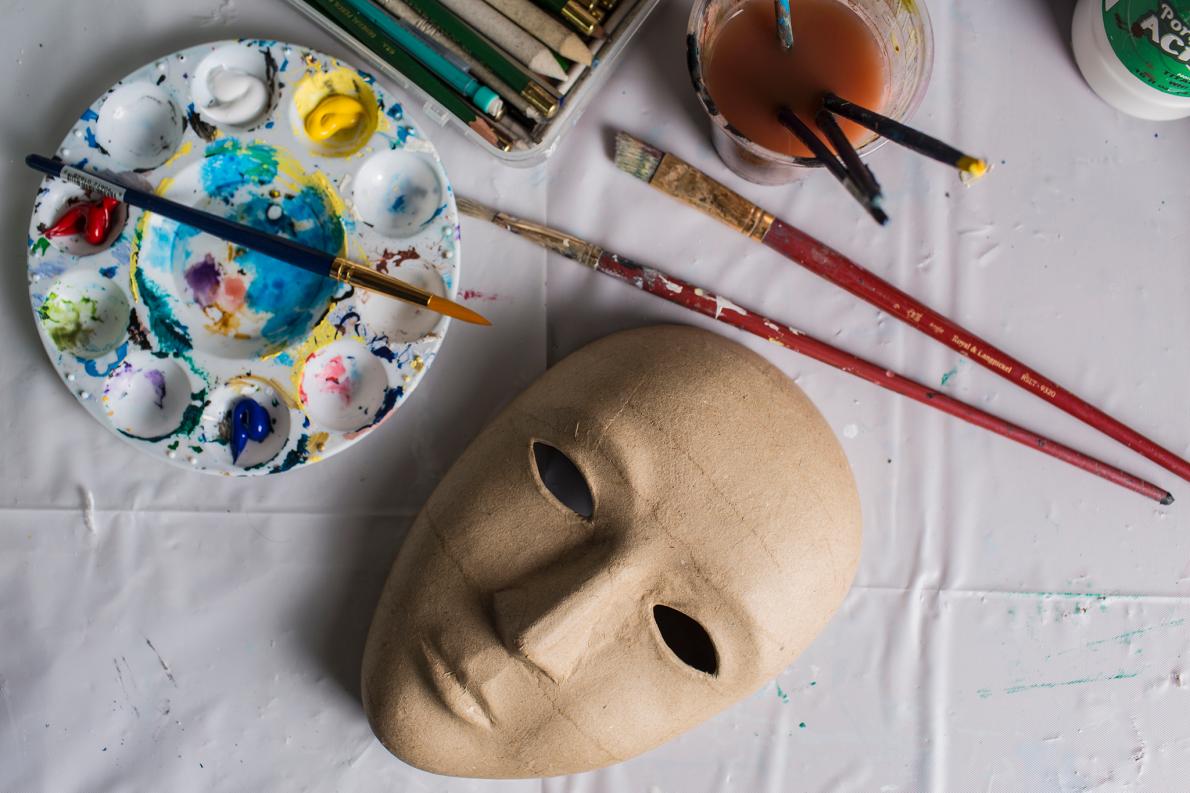
Melissa Walker, an art therapist at the National Intrepid Center of Excellence, works with service members suffering traumatic brain injury and psychological health conditions. In the National Geographic article How Art Heals the Wounds of War, Melissa shares how she implements art therapy in treating returning injured men and women. She provides service members a blank papier-mâché mask, and asks them to decorate it. The final product shows the psychology of pain, something that not even high-tech neuroimaging machines can detect. By painting the mask, service members are able to express what they are feeling in art form, opening a door to conversation with their social worker or psychiatrist.
The struggle with mental illness can be a long and painful journey. Healing and support come in many forms and suffering individuals can choose to utilize mainstream or alternative tools in their healing journey. Current research is spotlighting art therapy as a creative outlet in finding a way to cope with mental illnesses and stress.
The American Art Therapy Association promotes the use of art media to resolve conflicts and problems, develop interpersonal skills, manage behavior, reduce stress, increase self-esteem and self-awareness and achieve insight.
The power of art therapy has transformed Amy Oestreicher, who survived a coma, 27 surgeries, sexual abuse, and medical trauma. After spending three months at Yale Hospital, unable to eat or drink, Amy found an outlet through art. It was the beginning of a new journey for Amy, one that would help her deal with everything happening in her life. She explains that once she discovered painting, her world changed. Through art she was able to express things that were too painful or complicated for words.
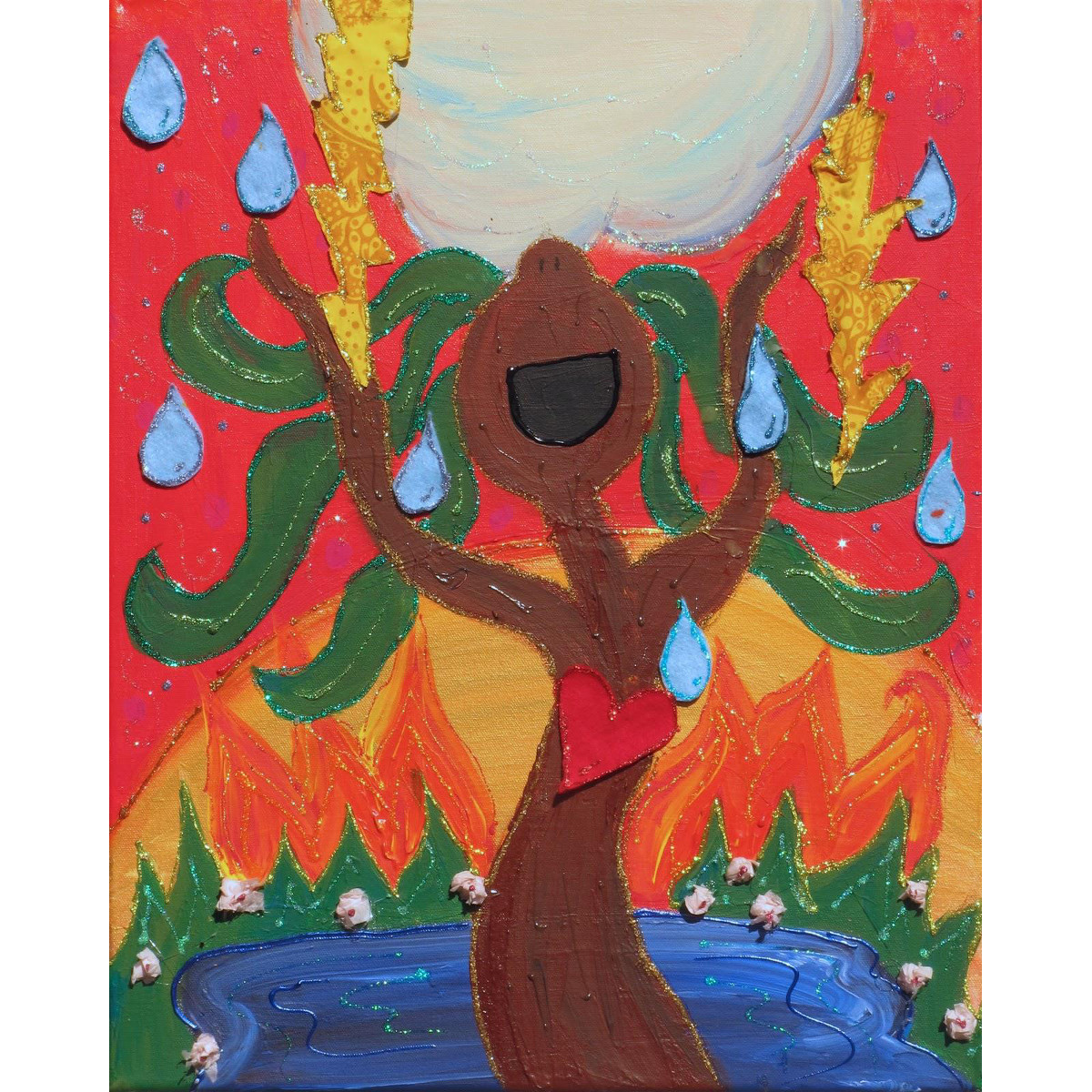 |
| Singing Tree, Amy Oestreicher |
“Singing Tree” (right) was Amy’s first art project that she completed while hospitalized. As she struggled with anxiety and confusion, creating her first artwork helped her replace trauma with hope.
Amy recalls, “Every tree seems to be singing and dancing, although the teardrops and lightning bolts are always streaked across the bold backgrounds. Even though [it was] sadness [prompting] me to paint, the act of painting became joyful. By the time I finished a painting, I was exhausted and oddly happy. By painting, I could see what I was feeling. And to know I could feel at a time when every surgery made me feel more and more like a robot, well, that just made me very happy.”
Art therapy focuses on creating images when words can’t describe the trauma.
In the the National Institute of Health’s article How Arts Affect Your Health, Megan Robb, a certified therapist at NIH’s Clinical Center, explains, “When traumatic memories are stored in the brain, they’re not stored as words but as images. Art therapy is uniquely suited to access these memories.”
Art therapy helps externalize trauma and view it as a positive exchange. Robb believes that this process allows “an active involvement in your own healing.”
Art therapy is a creative process that can be beneficial to anyone, regardless of his or her artistic level or background. For example, Amy’ own background did not include artistic training, and she considers this a blessing.
She says, “Not being savvy with technical art terms is an advantage when my lines aren’t perfectly shaped or my colors aren’t seamlessly blended. My oblivion and unashamed passion helped to silence my inner critic. Whatever I paint, I create from the heart. I try to focus on the physical sensations of feeling my brush glide across the canvas, drenched in a juicy glob of heavy-bodied paint. I feel the bristles press against the stretched linen; I see each fiber drag across a mound of cherry-apple red. As I guide my brush up and down my canvas, the repetitive gestures become meditative.”
Art therapy promotes well-being for people suffering with mental illness, stressful life changes, and post traumatic stress disorder (PTSD).
Photography by Rebecca Hale, National Geographic
Melissa Walker, an art therapist at the National Intrepid Center of Excellence, works with service members suffering traumatic brain injury and psychological health conditions. In the National Geographic article How Art Heals the Wounds of War, Melissa shares how she implements art therapy in treating returning injured men and women. She provides service members a blank papier-mâché mask, and asks them to decorate it. The final product shows the psychology of pain, something that not even high-tech neuroimaging machines can detect. By painting the mask, service members are able to express what they are feeling in art form, opening a door to conversation with their social worker or psychiatrist.
The arts demonstrate that creative expression will lead to better well being. Whether it’s musical expression, painting or even cooking, any creative outlet can help reduce stress and trauma related to health issues or life circumstances.
To help Amy Oestreicher in her journey to create inspirational media, articles and tutorials for others in need of healing, become a patron at patreon.com/amyo. You can also listen to how she has been inspired her to transform obstacles in her path into opportunities for growth.
Learn more of the story behind it here - https://amyoes.com/2016/06/17/tedx-video/


